



Jin Mai Lang reaps the benefits of the two world’s fastest aseptic PET lines with dry preform decontamination

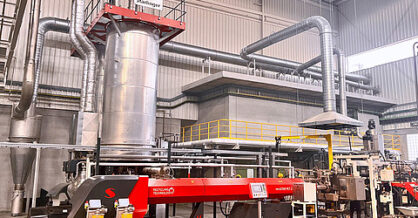
October 16, 2019 -Jin Mai Lang recently installed two Sidel complete aseptic PET lines, both integrating Tetra Pak Processing System technologies and the company’s Aseptic Combi Predis™. These lines deliver a staggering production output of 60,000 bottles per hour – making them the world’s fastest aseptic PET lines with dry preform decontamination for low acid products.These complete solutions, alongside newly designed PET bottles, helped the key player in the Chinese beverage market to increase production capacity of their low and high acid products packaged in PET, while lowering their Total Cost of Ownership (TCO). Impressed by the benefits gained through this installation, Jin Mai Lang recently invested in another three Sidel aseptic complete lines, running at the same speed.
The Chinese beverage market grew significantly between 2017 and 2018, experiencing +3% in sales volume and +5% in sales value. This positive trajectory was mainly driven by a few beverage categories, including RTD tea which showed a remarkable 7% growth within a single year1
It is no surprise then that one of the biggest Chinese beverage and food manufacturers, Jin Mai Lang, recently needed to increase their production capacity around their black and green tea, plus various kinds of flavoured water, to match the rising local demands. “We started our successful partnership with Sidel back in 2006,” remembers Xianguo Fan, Chairman of Jin Mai Lang. “Thanks to this 13-year long cooperation, which has been materialised in many repeated orders, we currently have more than fifty pieces of Sidel equipment running in our factories, including seven complete PET ultraclean lines and 20 hot-fill PET lines. Over the years, we have built complete confidence in Sidel, recognising the quality and the reliability of their equipment, their innovation-driven mindset, as well as their local support and service capabilities.”
Considering the challenges placed by the very competitive and crowded local beverage market, where securing brand attractiveness while minimising TCO is a must, the top Chinese beverage player decided to further their trust in Sidel. For the first time in their history, they chose the company’s proven, safe and sustainable Aseptic Combi Predis within the two complete aseptic PET lines, benefitting from dry preform decontamination. The lines have been installed in the company’s factories in Tianchang and Cuiping, located in the Anhui and Henan Province, respectively.
“We wanted to minimise our TCO by relying on a sustainable and energy efficient piece of equipment that uses very few chemicals and no water during production. For us, this choice translated to significant savings,” Mr. Fan explains. The two complete aseptic PET lines started production between the end of 2018 and mid-2019, both featuring more than 95% efficiency while delivering 60,000 bottles per hour.
Appealing to younger consumers’ preferences with new bottle design
“Jin Mai Lang also wanted to refresh the ten year old designs applied to their iced and green tea PET bottles. They realised they were no longer perceived as eye-catching by young local consumers, who represent their target group.” Steven Xie, Sidel Packaging Director said. “To address this, Sidel provided a 360° packaging service including more than 15 conceptual and technical designs, pilot bottle tests and three pilot moulds. By taking advantage of the freedom of shape offered by the PET dry preform decontamination process, we helped the customer revamp their product range without increasing the bottle weight, which stays below 18 grams.”
The result is a very modern and dynamic look and feel for increased attractiveness and brand recognition on crowded retailer shelves. A clean and round shoulder is now combined with a bottle base enriched with an embossed pair of glasses, appealing to younger generations of consumers. For additional flexibility and to welcome future needs, the iced tea bottle design has been developed to be applicable to both hot-filling and aseptic packaging production processes.
Excellent support
“We worked hand in hand with Sidel through every stage of the project,” Mr. Fan said. “We especially valued the many meetings we held with the packaging, marketing, and technical
teams to define the correct project specifications. Sidel’s quick responses and adaptability to our requirements resulted in a very smooth project management”, he added.

